
“I’m not the sporty type.” “I’ve never been coordinated.” “I’m too old to start something like that.” “I’m just not a confident person.” You may recognise a few of these. Most of us carry sentences like them around, and we say them so often that they stop sounding like opinions and start sounding like facts.
In martial arts we spend a lot of time on stance, structure and balance. The same idea applies to the way you talk about yourself. If the foundations are shaky, everything you try to build on top of them wobbles. This article looks at where limiting beliefs come from, why they’re so convincing, and some practical ways to loosen their grip.
Where the stories come from
Very few limiting beliefs are chosen on purpose. Usually they grow out of one or two moments: being picked last in a PE lesson, a teacher’s offhand comment, a bad first experience at a gym, or a parent who said “you’re the clever one, not the sporty one” without thinking twice about it.
At the time it was a single event. Over the years it becomes a label, and the label becomes an identity. By the time you’re an adult, “I’m not coordinated” doesn’t feel like a memory from when you were nine. It feels like who you are.
Why a label feels like a fact
The clever trick a limiting belief plays is that it protects itself. If you believe you’re not sporty, you avoid sporty things. Because you avoid them, you never get any better at them. Because you never get better, the belief looks correct every time you check it.
That’s why arguing with yourself rarely works. You can’t simply decide to believe the opposite, because your brain has years of “evidence” lined up. What changes a belief is new evidence, and new evidence only arrives when you do something the old story said you couldn’t.
Test the story instead of arguing with it
A more useful approach is to treat the belief like a theory and run a small, low-risk experiment. Not a giant leap, just one thing the story says you can’t do, done once, with no pressure to be good at it.
Martial arts training happens to be a very good place for this, because progress is broken into small, visible steps. In a Wing Chun class you don’t start by learning to fight. You start by learning to stand, then by learning the first movements of Siu Nim Tao, the first form. Nobody expects you to be graceful. You only need to be a little better than you were last week, and that is something you can actually see.
If you’d like to read more on this, our article on why waiting to feel ready keeps you stuck covers the same ground from a different angle.
Change the wording, not just the thought
Sifu Alan Bagley is an NLP master practitioner and a former clinical hypnotherapist, and in class he pays close attention to the words people use about themselves. Small changes in wording can make a real difference to what feels possible.
- “I’m not coordinated” becomes “I haven’t trained my coordination yet.”
- “I can’t do this” becomes “I can’t do this yet.”
- “I’m too old” becomes “I’m starting at a different point from someone younger.”
- “I’m not a confident person” becomes “I’m not confident at this so far.”
None of these are about pretending. Each one is simply more accurate than the original, because each one leaves room for change. A fixed label closes the door; a “yet” leaves it open.
Setbacks don’t prove the story right
Here’s where many people come unstuck. They run the experiment, have one bad session, and the old belief says, “See? Told you.” Forgetting part of a form, losing balance in a drill or feeling awkward next to someone more experienced isn’t proof of anything except that you’re learning.
Everyone who has ever trained has had sessions where nothing clicked. The difference between people who keep going and people who stop usually isn’t talent. It’s how they explain the bad day to themselves. If you need a reminder that progress is happening even when it doesn’t feel like it, our piece on how to know when you’re actually making progress is worth a read.
Investing in yourself
Challenging a limiting belief takes a little time and a little courage, and it’s easy to put off. But it’s one of the best investments you can make, because the belief rarely stays in one corner of your life. The person who thinks “I’m not the sort of person who…” in the gym often thinks it at work and in relationships too. Shift it in one place, and it tends to loosen everywhere. We’ve written more about this in building confidence as an adult through Wing Chun.
Where Taking the Martial fits in
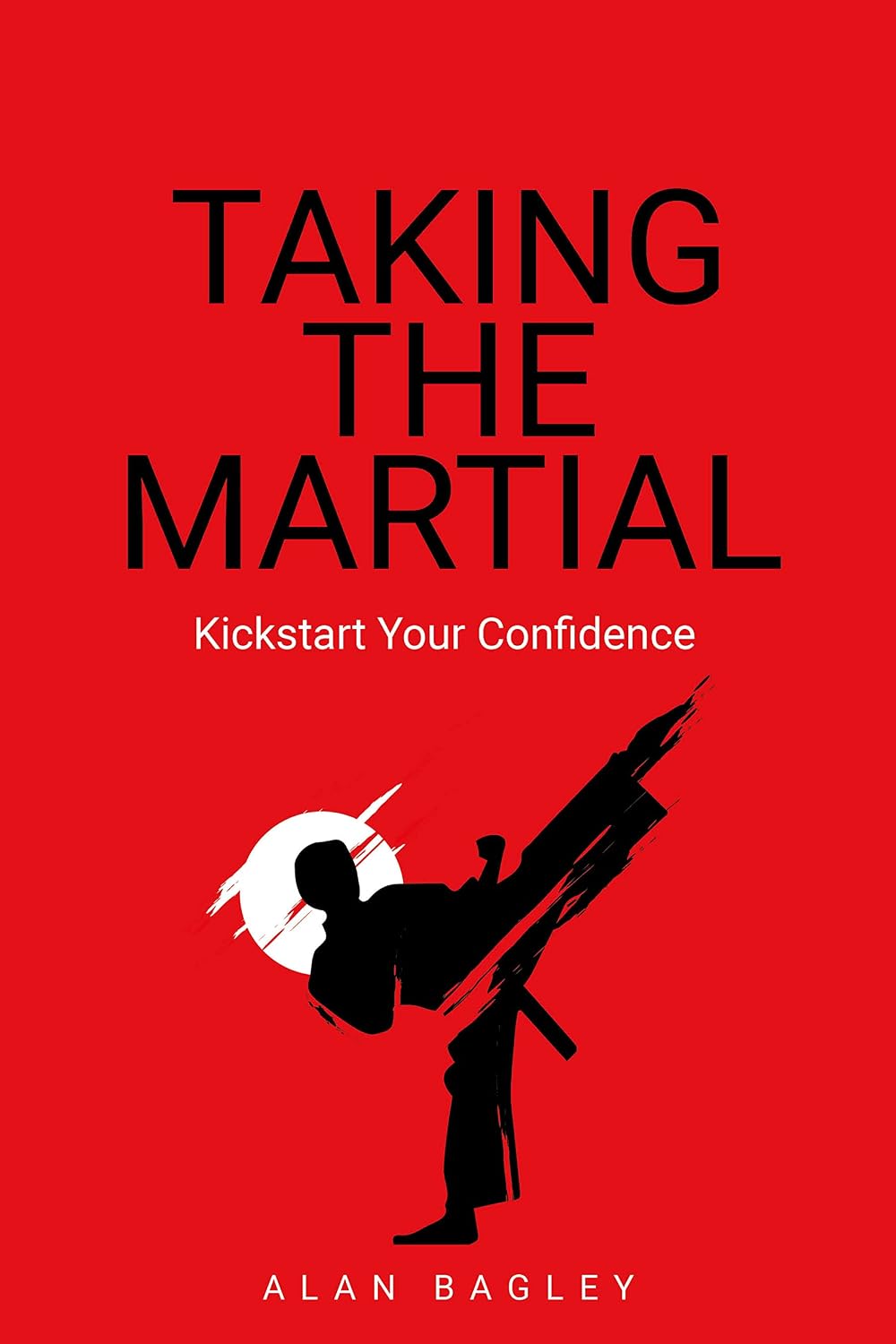
This is exactly the territory of Sifu Alan’s book, Taking the Martial: Kickstart your confidence. It shows how martial arts can help you overcome a limiting mindset, deal with setbacks, handle stress and invest in yourself for long-lasting results, whatever your age, fitness level, gender or race. It draws on more than 35 years in martial arts, since Alan first started training in 1989. It’s available on Kindle and in paperback, and you’ll find the details and Amazon links on the Taking the Martial book page.
Try it for yourself in Halesowen
If you live near Halesowen and one of those old stories has been keeping you away from martial arts, the simplest experiment is a single class. Your trial class is free, you don’t need any special equipment, and comfortable clothing is all you need to wear. We run weekday evening classes for children and adults at our full-time training centre on the Eagle Trading Estate, Stourbridge Road. You can see the details on our Wing Chun classes in Halesowen page, and book your free trial class here. If you’d rather ask a question first, call, text or WhatsApp Sifu Alan on 07821 126 685.
Want more Wing Chun in your inbox?
Join the list for training tips and the occasional offer.
We’ll only email you what you’ve agreed to. Read our privacy policy. You can unsubscribe at any time.